


From Wiggles to Calm: How Movement Builds Focus in Children

Updated: Aug 26, 2025
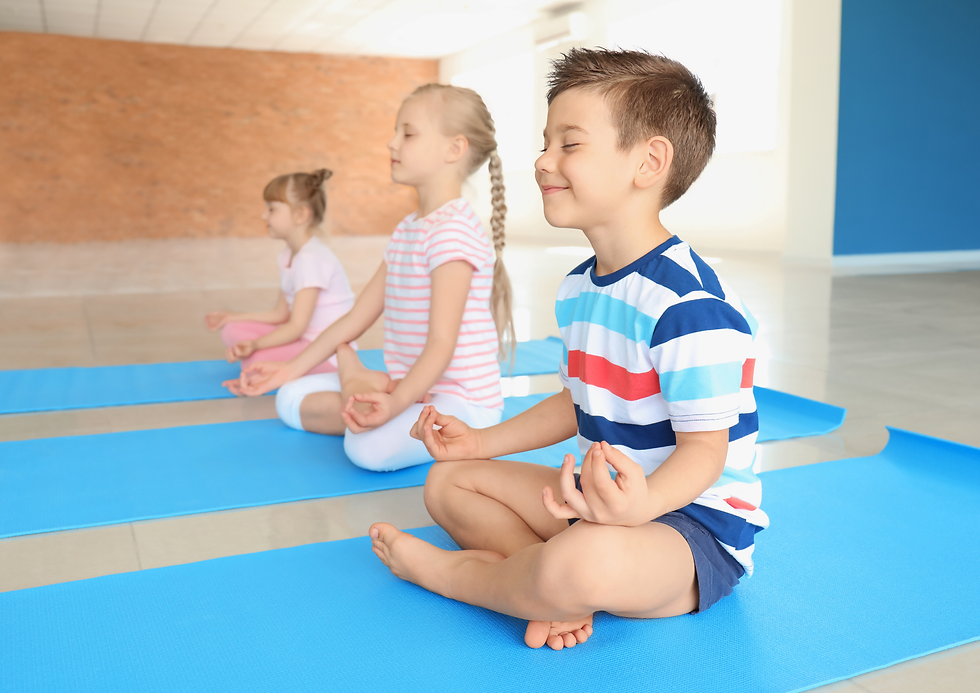
Have you ever been told, “They just need to sit still and focus”?
You internally sigh and think, "If only it were that simple".
The truth is, most children — especially those with sensory sensitivities, ADHD, anxiety, or neurodivergence — aren’t choosing to be fidgety or distracted. They’re moving because they’re trying to regulate their nervous system.
And here’s the thing: the more we try to force stillness without supporting their body’s need for movement, the harder it gets for them to focus.
The good news? We can actually use movement to support attention, focus, and emotional regulation — and that’s exactly what we do through yoga therapy at The GET Co.
Why Can’t Kids Just Sit Still?
Let’s talk brain-body connection.
Before a child can concentrate, their body and nervous system need to feel safe, steady, and supported. When a child is bouncing, wiggling, slouching, or rolling on the floor — that’s often their body’s way of saying, “I need input.”
This is especially true for kids who:
Struggle with transitions or focus
Can’t sit through group time
Are constantly on the move
Fidget, rock, spin, or avoid eye contact
Are labelled “disruptive” when they’re actually overwhelmed
What they need isn’t punishment or pushback — it’s proprioceptive and vestibular input.
What Does That Mean?
🧠 Proprioception
This is your body’s sense of where it is in space. When kids get deep pressure input (like squeezing, pushing, pulling, or jumping), it helps them feel more grounded and secure.
🎢 Vestibular input
This is your body’s sense of balance and movement. Activities that involve spinning, swinging, rolling or changing direction help regulate this system — which is closely linked to emotional balance and focus.
If these systems are under- or over-stimulated, the child might feel disconnected, anxious, or dysregulated.
Yoga therapy is designed to gently regulate both.
Yoga Poses That Build Focus (and Calm)
Here are some of our go-to movements we use in class to support transitions and attention:
Downward Dog Tunnel:
Strengthens shoulders, calms the nervous system, and builds body awareness. Crawling through the “tunnel” adds a vestibular bonus.
Bear Walks & Crab Walks:
Proprioceptive powerhouse! These animal-style walks burn energy, build coordination, and get the brain ready to focus.
Candle Breath with Butterfly Arms
A breathing exercise paired with movement — children “blow out” a candle slowly while flapping their arms like wings. Helps regulate breath, attention, and emotion.
Tree Pose with a Twist
Balancing builds core stability and focus. Add a “windy day” challenge to encourage resilience and adaptability.
Rocking and Rolling (on back)
Soothing vestibular input that gently shifts energy and helps kids move toward stillness.
We also weave in visualisations, music, and mindfulness techniques to help children notice how their body feels before and after movement — a powerful tool for lifelong regulation.
Try This at Home: The “Wiggle Reset” Routine
Perfect for after school, before homework, or anytime the day starts to unravel.
What You’ll Need: A mat, a clear space, and 5–10 minutes
Who It’s For: Ages 3–12 (younger kids may need modelling)
🌬 Step 1: Blow Out the Worries (1 min)
Sit cross-legged.
Inhale deeply… and blow out like you’re extinguishing a birthday candle.
Say: “Blow out the worries.”Repeat 5 times.
🐻 Step 2: Bear Walk Parade (2 min)
Walk on hands and feet, hips high.
Let them growl, stomp, or march around the room.
🌳 Step 3: Tree Pose Challenge (2 min)
Stand on one leg, foot to ankle/knee. Hands above head.
Say: “I am calm. I am strong.”
Switch sides. Try with eyes closed or a gentle breeze.
🪨 Step 4: Rock & Rest (3–5 min)
Lie on back. Hug knees. Gently rock side to side.
Then stretch out and rest, placing one hand on belly.
Invite your child to notice, “What’s different in your body now?”
This simple sequence gives children what they need to get where they want — calm, focused, ready.
The Takeaway?
Movement isn’t the opposite of focus — it’s the pathway to it.
Especially when it's intentional, sensory-rich, and delivered in a safe and supportive space.
At The GET Co., our classes aren’t about perfect poses —they’re about helping children feel empowered in their own bodies. Because when a child feels calm and connected... That’s when the magic happens.
✨ Want to learn more about our programs for kids who can’t “just sit still”? Let’s chat — contact me now; you have nothing to lose, and based on the research, your child has everything to gain!


Comments